
How do I make money fast in Ostranauts?
Short K-Leg boneyard strips → Licensed sales on permit days → OKLG courier gigs when docked. See salvage guide.
Ostranauts money guide: salvage profits, Scrap vs License kiosks, Gig Nexus jobs, bulk trading, 1.0 bounties, Fixer black market, and OKLG debt cycles.
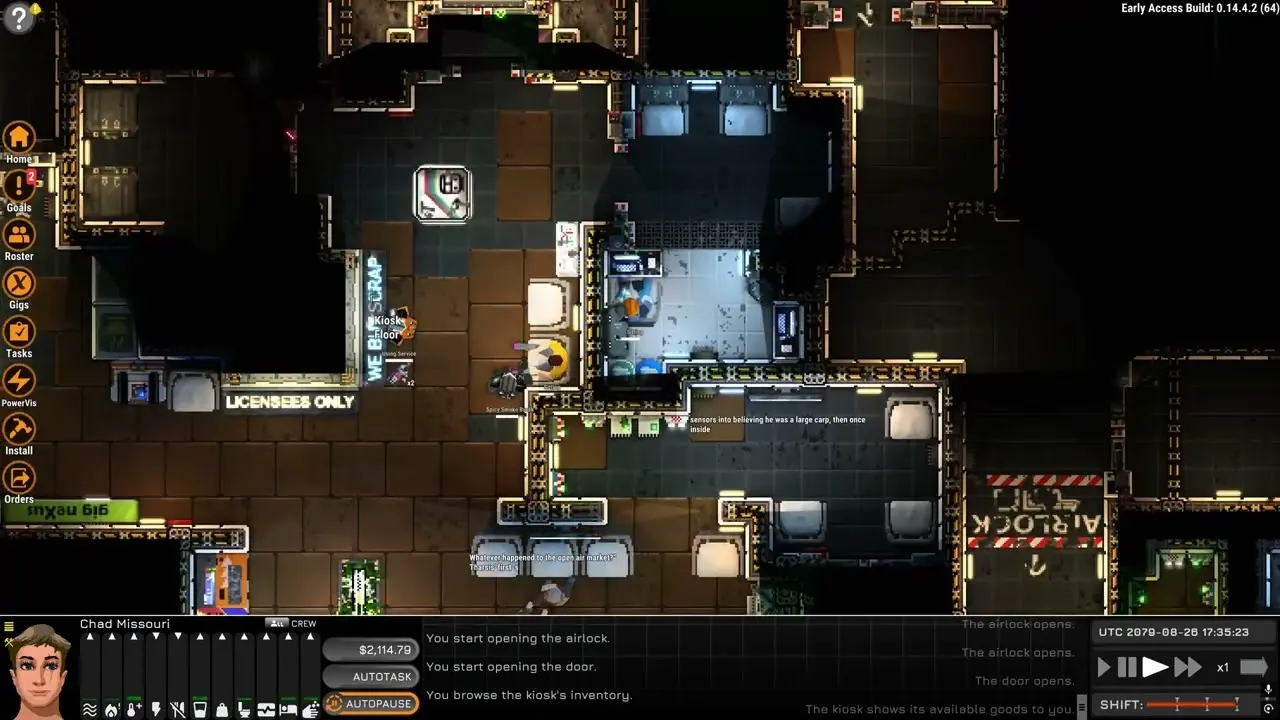
MO Chad walks OKLG kiosk sales — Scrap vs Licensed pricing, permit timing, and turning boneyard loot into debt payments.
~10 min read
Sponsored
Ostranauts is a cash-flow survival sim dressed as a space opera. You wake at OKLG on a ~$100,000 loan ship, pay end-of-shift mortgage, and fund O2, RCS, food, and permits before you ever afford a fusion core. This Ostranauts money guide stacks salvage profits, Scrap vs License kiosks, Gig Nexus jobs, bulk trading, the 1.0 bounty system, debt cycles, black market Fixer trades, and station living costs into one income playbook. Verified August 16, 2026 · Steam · Official wiki — Gig Nexus.
| Income lane | Upfront cost | Best when |
|---|---|---|
| Boneyard salvage | EVA O2, tools, optional ~5k permit | Every early debt cycle — see salvage guide |
| Scrap kiosk | None | Damaged tiles, junk, ruined modules |
| License (Licensed Salvage) kiosk | Salvage permit (~5k / 24h) | Intact pumps, IFF units, fusion parts |
| Gig Nexus | Up-front gig fee | Station couriers or short reactor hauls |
| Bulk trading | Cargo pod + stock capital | Mid-game routes with known margins |
| Bounty hunting (1.0) | Ammo, fuel, combat prep | After stable hab and legal transponder |
| Fixer (black market) | Social access / Friend status | Rotating premium buys on ship fixtures |
Salvage profit is sell price minus cycle costs: EVA O2, RCS, permit fees, repairs, and mortgage for the day you were in the boneyard. A haul that fills your airlock but dies on the walk home is negative income.
| Loot tier | Example items | Typical buyer |
|---|---|---|
| S-tier modules | Polaris VDX-01 IFF (~$29k), fusion parts | License kiosk + permit |
| A-tier handhelds | RCS intakes, pumps, heaters, nav chips | License kiosk or Fixer rotation |
| B-tier gear | EVA suits, tools, weapons | License kiosk or station vendors |
| C-tier junk | Cracked tiles, ruined wiring | Scrap kiosk only |
Profit per minute beats profit per tile. Strip uninstallable modules first — screws and crowbar work — before cutting multi-tile hull. The salvage guide strip order exists because O2 is a meter running during every extra cut.
Pristine gear pays Licensed rates; Damaged and Ruined collapse toward Scrap pricing. One sloppy torch swing on a transponder turns a debt-clearing score into scrap metal — DmgViz before you cut.
Buying a broker derelict cheap, registering it, and selling components or the hull is salvage with paperwork. The transponder guide covers IFF and ownership — flipping without legal registration traps you in stolen-ship fees.
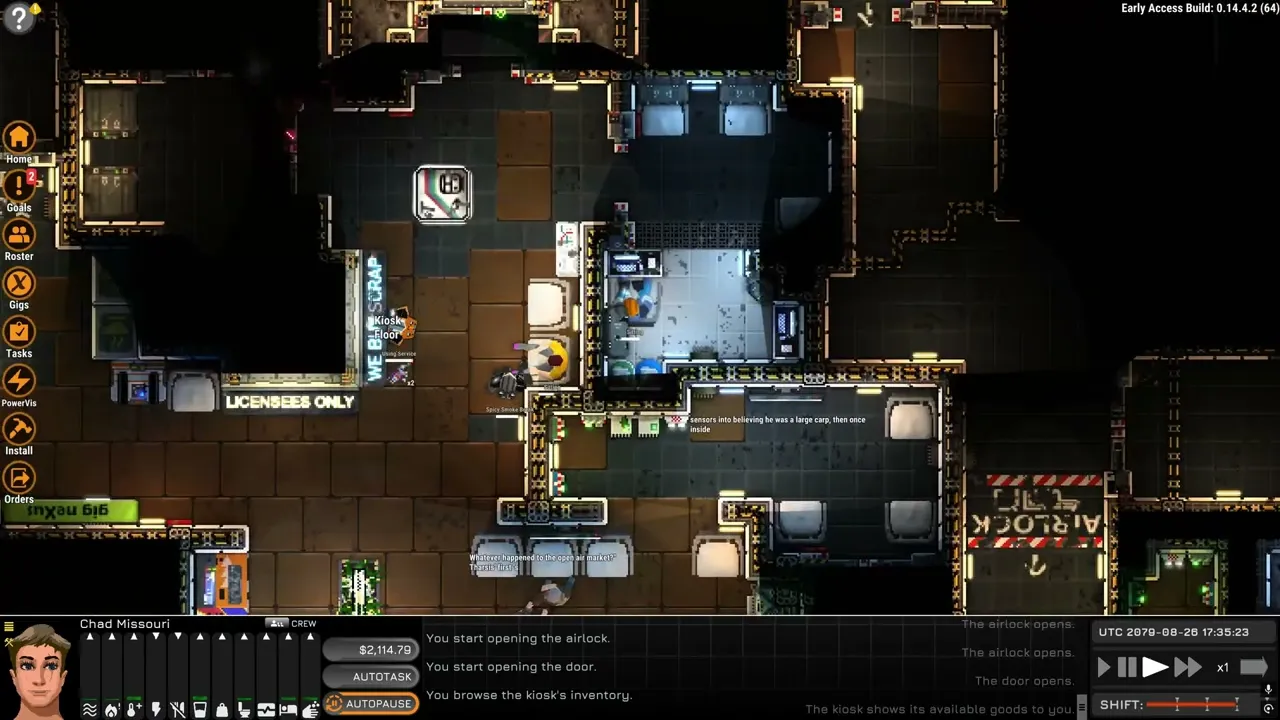
OKLG Azikiwe Commercial hosts distinct terminals. Scrap kiosks buy low-value and damaged material without questions. Licensed Salvage (License) kiosks pay premium prices on intact components but expect a valid Salvage Permit on high-value sales.
| Kiosk | Permit needed? | Sell here |
|---|---|---|
| Scrap kiosk | No | Damaged tiles, junk, ruined parts, low-tier scrap |
| License / Licensed Salvage kiosk | Yes for premium modules | Transponders, pumps, nav, fusion kits |
| Ship Broker | N/A (purchase) | Hull ownership, replacement transponders — not salvage sales |
| Fixer (Mescaform bar) | Black market access | Rotating high-value fixtures — see below |
At roughly ~$5,000 for 24 hours, the permit pays for itself the first time you sell one VDX-01 or intact Sulaiman part. Do not buy it on exploration days — purchase when your airlock already holds Licensed-tier loot from a planned strip.
You can strip without a permit, but premium modules either sell at Scrap rates or attract station security attention if you push luck. Early game: Scrap junk immediately, bank intact modules until permit day.
Dedicated cargo crates labeled junk vs premium prevent panic-selling at the wrong terminal when debt notifications pop. One mis-sold IFF unit funds several permit cycles — treat kiosk choice as part of salvage routing, not an afterthought.
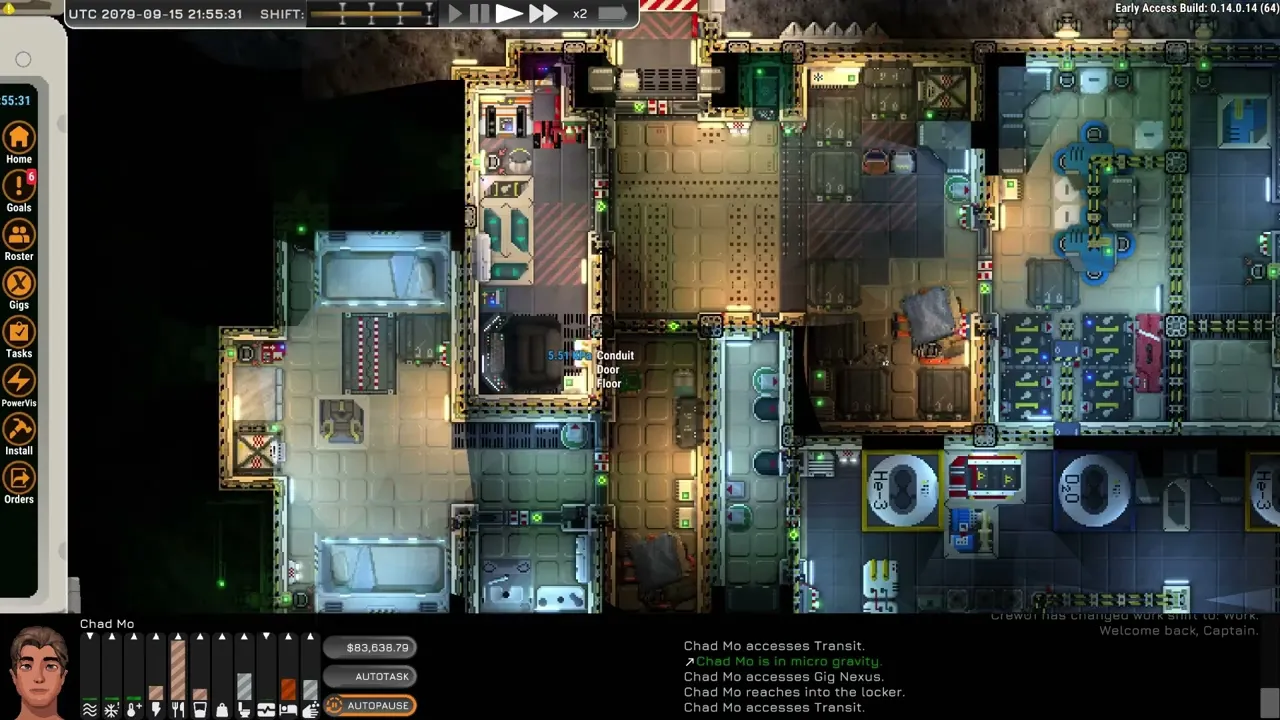
Gig Nexus Job Kiosks — Agile Workforce Solutions terminals on OKLG and other stations — list freelance contracts. You pay an up-front fee to accept a gig, then earn a tiered payout (Platinum → Gold → Silver → Bronze) based on job type, distance, and completion speed.
| Gig type | Ship required? | Notes |
|---|---|---|
| OKLG district courier | Often no — walkable | Locker pickup → locker or NPC drop inside station |
| Sensitive item delivery | Sometimes | Time pressure; read mass and clearance |
| Heavy Hitting / combat gigs | Yes — armed hull | Higher pay, higher medical bills |
| AI supercomputer haul | Reactor-powered ship | Keep internal battery charged en route |
| Honeypot / trap variants | Varies | Read flavor text — some are ambushes |
Old Emporium hosts a Gig Kiosk next to Mescaform — ideal on day one when your tug is vented or illegal. Pick up locker cargo, ride Transit Kiosk between OKLG districts, deliver before the timer bleeds your tier from Platinum to Bronze.
Fast completion hits Platinum; dawdling drops payouts through Gold and Silver. Subtract the up-front acceptance cost when comparing a gig to one more boneyard hop — a Bronze finish can net less than selling two Scrap crates.
Accept gigs on dock days when you already plan to undock for salvage — chaining a delivery waypoint on-route beats dedicated gig grinding that ignores permit and O2 restock windows.
Bulk trading uses cargo pods and Cargo Kiosks to move standardized goods — Consumer Goods, Fusion Parts, D2O, He3, Tools, Water, Weapons, and more — between stations with different stock and specialty pricing.
Once your hull carries cargo pod mounts and spare capital, a known buy-low / sell-high loop between two stations can beat random boneyard RNG. Trade routes need fuel, time, and transponder clearance — still cheaper than dying for a missing fusion regulator.
Tools, Space Suits, and Fusion Parts fill build gaps when salvage refuses to spawn them. Volatiles and Water support life support restock. Check kiosk specialty tags — not every station restocks every category daily.
Every dollar of margin must survive RCS cost and mortgage for travel days. Run bulk only when spreadsheet margin exceeds salvage hourly rate for your current build — otherwise strip another derelict.
Ostranauts 1.0 adds a formal bounty system: capture or kill flagged criminals for station payouts. It sits above gig running in risk — you need weapons, legal-ish transponder status, and med/repair reserves when targets shoot back.
Salvage is predictable O2 math; bounties are combat RNG. Start bounties after OKLG shift costs are boring — spare ammo, suit patches, and a crew member with combat skills help.
Alive captures often pay more but need restraint weapons, zip ties, and cargo space. Dead targets are faster but may reduce faction standing — read contract terms at the posting terminal before undocking.
Bounties tie into Ceres Affair endgame threads and achievement routes. Treat them as mid-game income diversification, not day-one debt relief — gig couriers and Scrap sales fund your first pistol.
Your starter loan ship carries roughly $100,000 principal. Each 6-hour shift can bill mortgage until you pay down the balance at Ogiso Bank / debt terminals on OKLG. Sleeping advances time — idle broke shifts compound faster than failed EVA.
| Cycle beat | Action | Why it matters |
|---|---|---|
| Wake | Check debt notification and loan balance | Know this shift's mortgage hit before spending |
| Earn | Salvage, gigs, or trades | Income must beat mortgage + living costs |
| Sell | Correct kiosk for each loot tier | Premium sales fund principal payments |
| Pay | Ogiso Bank — principal when flush | Lower mortgage on remaining balance |
| Sleep | Advances day counter | Only sleep when next shift's costs are covered |
Paying mortgage-only keeps you alive; paying principal lowers the next shift's bleed. Rule of thumb from the beginner guide: after costs, split between O2/tools restock and first chunk of principal — starving EVA gear to pay debt buys one cheap death.
Ignoring debt long enough triggers collection pressure at OKLG — another reason transponder and registration matter when you swap hulls. Legal dock access beats hiding with a stolen frame.
The Fixer NPC operates from Mescaform bar in OKLG Old Emporium — K-Leg's black-market broker for high-value ship fixtures and rare salvage buys. Inventory rotates on a timer (red countdown in the trade UI).
First contact uses Social Combat negotiation — gambits to prove you are worth trading with. Failing the minigame is not always final: raising the Fixer to Friend status also unlocks trade (friendship bypass with different dialog). Starting with Fixer as a Build-a-Resume contact skips the gambit entirely.
Rotating demand lists focus on powered ship fixtures: intakes, thrusters, batteries, reactors, fuel and gas tanks, doors, fridges, nav stations, pumps, lights, toilets, and similar. A few items each rotation buy at premium markup; others at baseline — check the timer and sell on peak demand days.
License kiosk is steady legal resale for salvage permits; Fixer is market timing on components you already stripped. Run both: Licensed for IFF and fusion parts on permit day, Fixer when rotation highlights thrusters or batteries you stockpiled.
OKLG living is not free even on dock. Budget beyond mortgage for crew salaries, food and water, EVA consumables, RCS gas, permits, and berth fees implied in station life sim loops.
| Expense | Typical range / note | Skip at your peril |
|---|---|---|
| Ship mortgage | Scales with ~$100k starter loan | Bills at end of each 6-hour shift |
| Crew salary | ~$200–500/day per hire | Unpaid crew leave or sabotage mood |
| O2 / RCS restock | Varies by hull and EVA length | Next salvage run ends at 0% O2 |
| Salvage permit | ~5k / 24h when needed | Only on premium sale days |
| Food / water | Nutrient bars, canned goods | Hunger kills efficiency before debt does |
| Repairs | Post-EVA suit patches, hull tiles | Cheaper than funeral costs |
Transit Kiosk moves between Azikiwe Commercial, Old Emporium, and other OKLG zones — factor time when chaining Gig Nexus locker runs with Licensed kiosk sales. Walking is free; missing a gig timer is not.
Every recruit adds salary, Death Pay escrow, and life support draw aboard. A solo captain clears debt slower but skips payroll — see crew guide before hiring on a loan tug.
Money problems in Ostranauts are usually routing errors, not bad luck.
| Mistake | Cost | Fix |
|---|---|---|
| Premium loot → Scrap kiosk | Loses thousands per item | Sort crates; permit before Licensed sales |
| Permit on empty haul days | ~5k wasted | Buy permit when airlock holds tier-A modules |
| Bronze-tier gig finishes | Fee > payout | Skip gigs you cannot hit Platinum on |
| Fixer sale on wrong rotation | Baseline price | Watch red refresh timer in trade UI |
| Idle sleep while broke | Interest without income | One Scrap run minimum before bed |
| Bounty before combat prep | Med + repair spiral | Fund ammo and suits from salvage first |
Short K-Leg boneyard strips → Licensed sales on permit days → OKLG courier gigs when docked. See salvage guide.
Scrap for junk and ruined parts; License (with salvage permit) for intact modules like IFF units and pumps.
Old Emporium Gig Kiosk (Mescaform district) plus other station terminals — courier jobs can pay without undocking.
Negotiate with the Fixer in Mescaform bar, or reach Friend status, or start with Fixer as a contact in Build-a-Resume.
Roughly $100,000 on the loan ship — end-of-shift mortgage until you pay principal at Ogiso Bank.
Mid-game with cargo pods, spare capital, and a known profitable route between Cargo Kiosks.
Formal bounty hunting for criminal targets — combat income alongside gigs and salvage.
Salvage guide · transponder · beginner guide for first cycle pacing.
August 16, 2026
Matched by build plan, shared topics, and guide progression — not random related links.